
Study 039 · Identity, Self-Image and Self-Worth, Part 4 of 5
How it grows, what wounds it, and where healing begins
Hello again, dear friends, and welcome to Part 4. In Part 3, we saw that your identity is determined by birth, that the serpent’s first lie was an attack on that identity, and that a shepherd boy who knew who he was brought down a giant. (see: Identity, Self-Image and Self-Worth – Part 3: Identity by Birth)
Now we come to the second word: self-image.
1. A picture is not the thing itself
Your identity is a fixed reality. It is the essence of your being. When a child is born, they already are who they are. But they must develop an awareness of who they are as they grow up. With the right environment, and the right input from the important people around them, that awareness takes root in the deepest levels of their mind. That is how they come to see themselves.
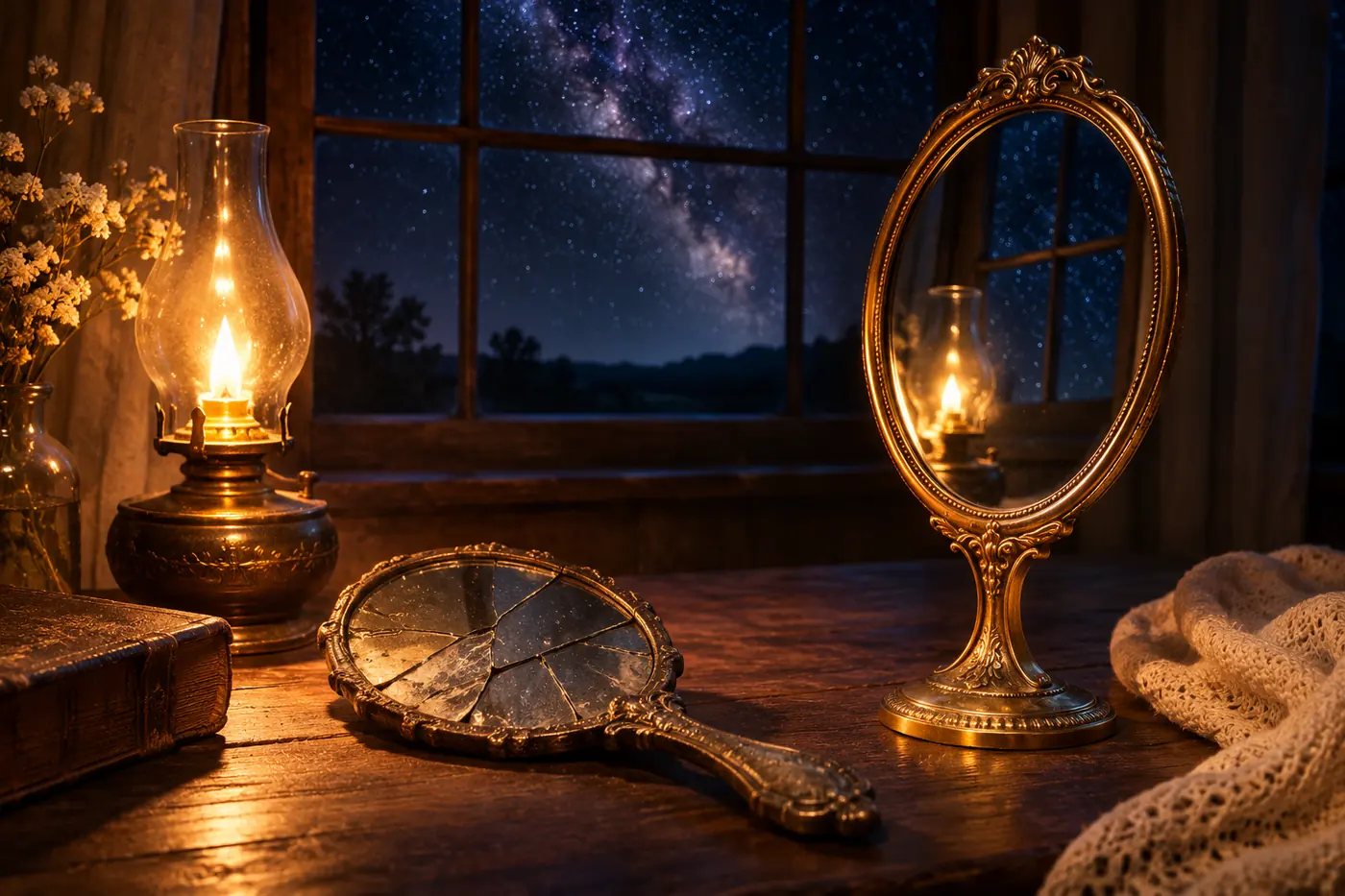
But notice this. A perception of something is not the thing itself. Your perception of who you are is not your identity. It is an image of your identity. That is why we call it the self-image.
So, in simple terms: your identity is who you are in spirit. Your self-image is how you see yourself, whether that picture is grounded in the reality of your true identity, or in some phantom idea of who you are.
2. Where a self-image is formed
This is why parents carry such a huge responsibility. A healthy family home is meant to be a safe place where a child can grow and develop a sense of who they are, even if, at first, that sense rests only on natural things like family and culture.
In parts of the world where modern life has had less impact, small villages made up of several families still live by this principle. Everyone in the village helps to raise the children, through daily life, household chores and education. A child in that setting can grow up with a strong sense of family heritage, and of who they are within the community. It all becomes part of their self-image.
That is a self-image based on biological and cultural identity. An awareness of our spiritual identity, however, comes by revelation, through the ministry of the Holy Spirit and the Word of God. That is the renewing of the mind Paul speaks of in Romans 12:2: bringing the beliefs of our heart in line with what God says about us. (see: Identity, Self-Image and Self-Worth – Part 1: Who You Really Are)
3. When home is not safe
Of course, millions of children are not born into the arms of two parents in a loving, wholesome relationship. When you come across a truly loving family, you have found one of the cornerstones of a society. Sadly, many homes struggle with serious dysfunction.
Let me be clear. There is no such thing as a perfect household where everyone always acts out of unconditional love. Disagreements and tensions are normal in every relationship. We all try to influence one another at times, each in our own way. But when that crosses over into emotional, psychological, financial, sexual or physical abuse, there is a serious problem.
The UK government defines domestic abuse as “any incident or pattern of incidents of controlling, coercive, threatening behaviour, violence or abuse between those aged 16 or over who are, or have been, intimate partners or family members regardless of gender or sexuality”. It adds that the abuse can include psychological, physical, sexual, financial and emotional abuse.1
And yet we know that children much younger than sixteen are often caught in the middle of what happens at home. Since the Domestic Abuse Act 2021, children who see, hear or experience the effects of domestic abuse in the UK are recognised as victims in their own right, not just as witnesses.2 Living with patterns of abuse can traumatise a child again and again, and some carry complex trauma into adult life.
I only raise this to make one point. A child’s home should be a safe incubator for the development of a healthy sense of self-worth. A destructive, abusive or dangerous home does a great deal to damage that process. Many people who come out of such homes face a huge challenge later in life as they work through the wounds of childhood.
But there is grace in God for healing and restoration from this kind of emotional and psychological pain.
4. When Church makes it worse
Sadly, when wounded people end up in Church groups that control their members, it adds insult to injury, and the painful memories are not healed at all. (Dr Jim Richards’ book Escape from Codependent Christianity deals with this well.) Religion cannot heal a broken heart. It will rather push the pain down even further.
The sociologist Michael P. Johnson studied different kinds of violence between partners. One pattern he identified, and called “intimate terrorism”, is violence used as part of a wider pattern of coercive control.3 The UK government describes controlling or coercive behaviour as acts designed to make a person feel inferior or dependent: cutting them off from friends, help and support, taking advantage of their money and possessions, removing their independence, and controlling what they do. Underneath it all lies fear.
Think about it. The abuser demands obedience, submission to their directions, and loyalty above everything and everyone else. “Love me, or there will be consequences.”
Now translate that into a Church where eternal hell and the lake of fire are at the heart of the doctrine. Add to it teaching on submission to the leadership, staying “under the anointing” of the man or woman of God, and paying your tithes, with threats from the pulpit for anyone who does not comply. That kind of message does not produce faith. It produces fear. In effect, it is spiritual coercive control, with the preacher standing in the place of the abuser.
So, let me gently ask: have you been on the receiving end of that kind of message? If so, I want you to know that it did not come from the heart of your Father. (see: The Myth of Hell – Part 1: Whose Standard Decides?)
5. Where healing begins
Healing does not begin with more effort, more rules, or more fear. It begins with the revelation, and the experience, of God’s unconditional love for you.
There is no fear in love; but perfect love casteth out fear: because fear hath torment. He that feareth is not made perfect in love.
1 John 4:18 (KJV)
As that love becomes real to you, your self-image begins to change. You begin to see yourself the way your Father sees you. And that brings us to the third word, and to the most beautiful truth of all. (see: The Love of God – Part 1: Perfect Love Casts Out Fear)
6. Coming up next
In Part 5, the final part of this series, we will look at self-worth: what you are really worth, and who decides it.
Until then, remember: the picture you have of yourself can be healed. Let your Father show you what He sees.
Grace and peace to you.
Pat the GospelMan
First published on 24 September 2023. Revised and divided into a series, 2026.
Identity, Self-Image and Self-Worth · Part 4 of 5
← Part 3 · All 5 parts · Part 5 →
Bibliography
Johnson, Michael P., A Typology of Domestic Violence: Intimate Terrorism, Violent Resistance, and Situational Couple Violence (Northeastern University Press, 2008).
Richards, James B., Escape from Codependent Christianity: From Religious Control to Spiritual Freedom (Destiny Image, 2008). Impact Ministries <https://impactministries.com/>.
Domestic Abuse Act 2021 (UK).
The Holy Bible, King James Version (1611).
Notes
- UK Home Office, cross-government definition of domestic violence and abuse (2013). The Domestic Abuse Act 2021 now sets out a statutory definition. ↩︎
- Domestic Abuse Act 2021, section 3. ↩︎
- Michael P. Johnson, A Typology of Domestic Violence: Intimate Terrorism, Violent Resistance, and Situational Couple Violence (Northeastern University Press, 2008). ↩︎
